Tuesday, April 24, 2007

“Life is Unfair!?” - Psalm 37

Elder Robert V's Sunday Message
Punchbowl Baptist Church
22 April 2007


Introduction

Painful events happen to us without any valid explanations. They could range from major events such as the loss of a loved one, etc. to the ordinary day to day things when we feel that we have been unfairly treated.

Human instinct is to seek revenge - to return at least the same treatment as what we have received. The Old Testament seems to support this in Lev 24:19-20:


If anyone injures his neighbor, as he has done it shall be done to him, fracture for fracture, eye for eye, tooth for tooth; whatever injury he has given a person shall be given to him.


However, this was the Old Testament system to ensure that justice is served without any partiality; without favoring the rich or powerful.

The worst feeling is when the other party gets away with what they have done and leaves away unpunished. It’s a time when we feel like shouting ‘Life is unfair’!

Whether we agree or disagree with this statement depends on how we see life:

a) If we consider that the world and everything around us happens by chance or revolves around who is in power at any given time, then we can truly say that ‘Life is Unfair’. We can probably add that ‘Life is Hopeless’ and so therefore, ‘Help yourselves because no one else will’.

b) If we consider God to be in control of everything through his power, wisdom, and love, then we can be assured that ‘Life is as God wills it to be’!


Read Psalm 37-1-9 (NIV)
1 Do not fret because of evil men or be envious of those who do wrong; 2 for like the grass they will soon wither, like green plants they will soon die away.

3 Trust in the LORD and do good; dwell in the land and enjoy safe pasture. 4 Delight yourself in the LORD and he will give you the desires of your heart.

5 Commit your way to the LORD trust in him and he will do this: 6 He will make your righteousness shine like the dawn, the justice of your cause like the noonday sun.

7 Be still before the LORD and wait patiently for him; do not fret l when men succeed in their ways, when they carry out their wicked schemes.

8 Refrain from anger o and turn from wrath; do not fret—it leads only to evil. 9 For evil men will be cut off, but those who hope in the LORD will inherit the land.
1. Instructions from the Psalm

Although there is no definite pattern in the Psalm, one can see that David, the author of this Psalm, aims to show the contrast between the wicked/evil men and the righteous/blameless.

The Psalm does not deny the reality of life’s seeming unfair events but confirm the fact that oftentimes-evil men prosper while the righteous ones suffer.

David also shows the final outcome of the wicked and the righteous. And so, he gives the reasons for his instructions to the righteous and the basis for living righteously.

1 Do not fret because of evil men or be envious of those who do wrong; 2 for like the grass they will soon wither, like green plants they will soon die away.

A. The opening verse is a straight to the point instruction. Both the words ‘fret’ and ‘envious’ are words that portray intensity. ‘Fret’ is described as ‘burning or heated anger’; ‘Envious’, which has the same intensity, is described as ‘jealousy with zeal’. In other words, David says, do not let your heart burn from jealousy and anger when evil men do you wrong. In verse 2, he somehow gives a comforting word that evil men are only as temporary as grass and so their wrongdoing will soon come to a stop.

Fret - charah (חָרָה, 2734), “to get angry, be angry.” This verb appears in the Bible 92 times. In the basic stem, the word refers to the “burning of anger” as in Jonah 4:1. In the causative stem, charah means “to become heated with work” or “with zeal for work” (Neh. 3:20). [1]
B. Verses 8-9 provides more substance to verses 1-2 in that David now gives further reasons why we should not fret and be envious of evil men.

8 Refrain from anger and turn from wrath; do not fret p —it leads only to evil. 9 For evil men will be cut off, but those who hope in the LORD will inherit the land.

1) Because feeding one’s heart with anger and jealousy only leads to evil. In doing so, the abused also becomes an abuser.

2) Because, aside from the temporary nature of evil men, they will also be cut off, meaning denied of anything good, in contrast to those who trust in the Lord who will receive their inheritance from God.

C. If verses 1-2 is the ‘what not to do when evil men do wrong and prosper’, verses 3-7 gives us the instructions of ‘what to do’. The believer’s life is not just characterized and confined by ‘not’ doing bad things, but is more motivated by ‘doing’ good things. And if we want to succeed in stopping envy and jealousy over the prosperity of the wicked, we have to focus more on these 4 things:

3 Trust in the LORD and do good; dwell in the land and enjoy safe pasture. 4 Delight yourself in the LORD and he will give you the desires of your heart. 5 Commit your way to the LORD trust in him and he will do this: 6 He will make your righteousness shine like the dawn, the justice of your cause like the noonday sun. 7 Be still before the LORD and wait patiently for him; do not fret l when men succeed in their ways, m when they carry out their wicked schemes.

If the words ‘fret’ and ‘envious’ signify evil intensity, the words in this group of verses signify godly intensity. In addition, while the description of the words ‘fret’ and ‘envious’ looks inwardly and feeds the heart with anger and bitterness which further leads to evil, the words in this group of verses all look outwardly and seeks the Lord.

1) Ps 37:3 Trust in the LORD and do good; dwell in the land and enjoy safe pasture.

Ø The word ‘trust’ figuratively means to be boldly confident to the point of carelessness. This is total trust in the Lord.

Trust - baw-takh' - A primitive root; properly to hie for refuge (but not so precipitately as H2620); figuratively to trust, be confident or sure: - be bold (confident, secure, sure), careless (one, woman), put confidence, (make to) hope, (put, make to) trust. [2]
2) Ps 37:5 Commit your way to the LORD trust in him and he will do this:

Ø The word ‘commit’ shows the idea of leaving or departing. In essence, this means to bring your cares and leave them all to him.

Commit - galah (גָּלָה, 1540), “to leave, depart, uncover, reveal. [3]
3) Ps 37:7 Be still before the LORD and wait patiently for him; do not fret l when men succeed in their ways, m when they carry out their wicked schemes.

Ø The word ‘be still’ or ‘rest’ is not merely a partial pause, but a feeling of fully still and silent. Literally speaking, it is to die or be destroyed. As still as being lifeless.
Be still (Rest) - 1826 דָּמַם, דָּמַם, דָּמַם [damam /daw·man/] v. A prim root [compare 1724, 1820]; TWOT 439; GK 1957 and 1958 and 1959; 30 occurrences; AV translates as “silence” six times, “still” six times, “silent” four times, “cut off” three times, “cut down” twice, “rest” twice, “cease” twice, “forbear” once, “peace” once, “quieted” once, “tarry” once, and “wait” once. 1 to be silent, be still, wait, be dumb, grow dumb. 1a (Qal). 1a1 to be silent. 1a2 to be still, die. 1a3 to be struck dumb. 1b (Niphal) to be silenced, be made silent, destroyed. 1c (Poal) to make quiet. 1d (Hiphil) to make silent (cause to die) [4]
4) Ps 37:4 Delight yourself in the LORD and he will give you the desires of your heart.

Ø This may be the greatest antidote that is available to us to ward off the evils of anger and jealousy over the wicked. This is the refreshing water that cools down the heart. It is when we fill our hearts with delight in the Lord that anger and jealousy will have no more place to stay.

Ø Further, this defines the true believer from the false ones. The true believer delights in God n the midst of his or her trials in life. It is his or her delight in God that makes the journey a joyful, instead of a painful one.

Ø May I also suggest that the motivation for us in trusting the Lord, committing our every care to him, and truly resting in him is because we delight in him.

2. Guarantees from the Psalm

ð The purpose of David’s instructions is 2-fold:
i) To take away the burden from us once we start feeling angry about our situations and leave the judging and avenging part to God.

ii) To make us more godly rather than turning into the same evil as the wicked.
ð The Lord is our Judge and he knows best when and how the sentence is carried, whatever that may be.

ð Evidence of this comes from the following:

I. Through the testimony of David (& God’s children)…

25 I was young and now I am old, yet I have never seen the righteous forsaken or their children begging bread. 26 They are always generous and lend freely; their children will be blessed.

35 I have seen a wicked and ruthless man flourishing n like a green tree in its native soil, 36 but he soon passed away and was no more; though I looked for him, he could not be found.
ð David is a great example of what he wrote in this Psalm. Even after knowing that he was the anointed king, he never forced himself to be king while Saul was still the King over Israel. David always said that he would not touch the Lord’s anointed. In due time, the Lord rewarded David of the kingship he was promised.

In the same way, if we trust the Lord as David did, the Lord will see us through our trials. I am confident that the Lord has delivered you out of trying situations and have given you justice in due time. This is not a one-off thing but should be our way of life – trusting God!

II. …that is made real through God’s promise

Notice that when you read the whole Psalm, it is literally the Lord who takes care of those who trust in him and is summarized in the concluding verses of the Psalm:

39 The salvation of the righteous comes from the LORD, he is their stronghold in time of trouble. 40 The LORD helps them and delivers them; he delivers them from the wicked and saves them, because they take refuge in him.

ð The Psalm does not teach us to escape our situation but to go through it by God’s power.

ð It is not those who help themselves that God helps but those who take refuge in him.
3. Summary - Is Life really unfair?

There are several implications when we say, ‘Life is unfair!’

1) We do not believe that God is in control of everything
2) We do not believe that God can be trusted
3) We do not believe that God cares
4) We do not believe in the testimony of David
5) In other words, we rather believe what our hearts tell us
6) We believe that evil men are more powerful than God
7) Therefore, we might as well believe that God is not truly God.

The next time we are tempted to say, ‘Life is unfair!’, take time to think if we are being fair at all in believing that life is unfair. If we call ourselves children of God, shame on us.

Instead, we should always say, ‘Life is what the Lord wills it to be’, and because we trust him, then, ‘Life is the way it should be’ – because if we do it right like David, the ‘unfair’ situation can turn into an opportunity to be Christ-like and to remind ourselves of our many blessings.


Count Your Blessings
Words by Johnson Oatman, Jr., 1856-1922Music by Edwin O. Excell, 1851-1921

Verse 1
When upon life's billows You are tempest tossed,
When you are discouraged Thinking all is lost,
Count your many blessings Name them one by one,
And it will surprise you What the Lord hath done.

Chorus:
Count your blessings Name them one by one.
Count your blessings See what God hath done.
Count your blessings Name them one by one.
Count your many blessings See what God hath done.

Verse 2
Are you ever burdened With a load of care,
Does the cross seem heavy You are called to bear.
Count your many blessings Every doubt will fly,
And you will be singing As the days go by.

Verse 3
When you look at others With their lands and gold,
Think that Christ has promised You His wealth untold.
Count your many blessings Money cannot buy,
Your reward in heaven Nor your home on high.

Verse 4
So amid the conflict Whether great or small,
Do not be discouraged God is over all.
Count your many blessings Angels will attend,
Help and comfort give you To your journey's end.


Amen…

God bless us all!
Robert Viuya


[1]Vine, W. E., Unger, M. F., & White, W. 1996. Vine's complete expository dictionary of Old and New Testament words . T. Nelson: Nashville
[2]Strong, J. 1996. The exhaustive concordance of the Bible : Showing every word of the test of the common English version of the canonical books, and every occurence of each word in regular order. (electronic ed.) . Woodside Bible Fellowship.: Ontario
[3]Vine, W. E., Unger, M. F., & White, W. 1996. Vine's complete expository dictionary of Old and New Testament words . T. Nelson: Nashville
v v: verb
TWOT Theological Wordbook of the Old Testament
GK Goodrick-Kohlenberger
AV Authorized Version
[4]Strong, J. 1996. The exhaustive concordance of the Bible : Showing every word of the test of the common English version of the canonical books, and every occurence of each word in regular order. (electronic ed.) . Woodside Bible Fellowship.: Ontario


Monday, April 02, 2007

The High Priestly Prayer: John 17


Since we are in the midst of the Lenten Season, it seems appropriate for us to review some passages taken from the accounts of the Last Supper by John.

According to B. W. Johnson's "Introduction To The Gospel Of John":

John the son of Zebedee was a former Galilean fisherman. He was a follower of John the Baptist, before becoming a disciple of Jesus. John, together with his brother James and Simon Peter became the three disciples closest/most intimate with Jesus. (John sat beside Jesus at the Last Supper; he was the only disciple at the crucifixion; he was entrusted with the care of Jesus’ mother and was the first male disciple to reach Christ’s empty tomb.)

The Gospel According to John differs in some respects from the others. It alone follows the chronological order of events. It gives an account of the Judean ministry of Jesus. It tells us that his ministry lasted for over three years and gives it the account of the resurrection of Lazarus.

It omits much with which the church was already familiar through the other Gospels and presents much that they had not recorded. It recognizes certain false doctrines which had begun to circulate; and it gives us the most detailed account of Christ’s wonderful discourse to the disciples, the night that he was betrayed.

It is the gospel of the Incarnation, of Love, and is regarded as the most Spiritual of the four Gospels. It alone unfolds fully the great doctrine of the Comforter, The Holy Spirit. And in the Apostle’s own words, it was “written that you may believe that Jesus is the Christ, the Son of God, and that by believing you may have life in his name.” (John 20:31)

The Apostle John's account of the Last Supper goes from chapters 13 to 17. In this study, we will discuss Christ’s prayer at the Last Supper, in John 17.

The Last Supper was held during the Jewish Feast of Passover, commemorating the night when God rescued Israel from Egypt in Exodus 12:

On that night in Exodus 12, each Israelite household were to slaughter a year-old male lamb with no defects, at twilight. They were then to take some of the lamb’s blood and apply it on the sides and tops of their doorframes. On that same night, God passed through Egypt, striking down every firstborn—both men and animals—of every household that did not have the blood of the lamb on their doorframes. “The blood will be a sign for you on the houses where you are; and when I see the blood, I will pass over you. No destructive plague will touch you when I strike Egypt.” (Exodus 12:13)

In some Bibles (NASB, ESV), John 17 is referred to as the “High Priestly Prayer.” The High Priest is the one sanctified/set apart to intercede for sinners before the Most Holy Righteous God. Here, we read of Jesus the Christ, the Messiah, the Chosen One, interceding in prayer for his flock (past, present and future).

(Short recap of previous chapters. Chap. 13: Jesus washed disciples’ feet; commands Judas to go; foretells Peter’s denials. Chap. 14: Jesus is the only way to the Father; Christ and the Father are one; Jesus is going away; Father is sending the Holy Spirit. Chap. 15: Abide in Christ like branches on a vine; “I chose you to bear much fruit to the Father’s glory;” the world’s hatred for Christ’s chosen ones. Chap. 16: Persecution; The Holy Spirit working in believers; Knowing how all things, good and bad, are going according to God’s plan, will turn the disciples’ grief into joy.)


Read John 17, then discuss the following:

(Note—Discuss does not necessarily mean Resolve. A few discussion points below are still being hotly debated by the most prominent theologians today. Remember, "Do not quench the Spirit. Do not despise prophecies, but test everything; hold fast what is good." 1Thessalonians 5:19-21 ESV. Are the comments being expressed Biblical? Unbiblical? Extra-biblical? In context with what the Bible consistently teaches? Allow Scripture to interpret Scripture--do not rely on mere opinions. Whenever we are stuck for answers, Elder Robert V reminds us that this should humble us, before our All-Knowing God. May it also drive us to search & study His Holy Word even further!)


“Father, the time has come… glorify me in your presence with the glory I had with you before the world began.” –Jesus Christ


Human beings are affected by time. Time often dictates what we have to do (due to deadlines); and often determines what we are able to do (due to age). But what about Jesus? Do you believe that events and circumstances determine what God does? Or are events and circumstances determined by what God does?

(Jesus was no victim of circumstance. All the on-going events and conditions from before the world began, have been planned/scheduled and worked out to a climactic point by God—not by the Roman government nor the Sanhedrin nor by Judas, not even by Satan himself: see John 14:30.)


Glorify means to Lift Up/Exalt; Magnify; Honor; to Acknowledge with great approval. How important is it for us to glorify God? How relevant is the Glory of God in your everyday live?


John 17:2 says that the Father gave the Son authority over… what? The Father gave the Son authority to give… what? The Father gave the Son authority to give this to ALL of… whom?


What is so special about eternal life? Do we accept Jesus just so that we can have eternal life? Just so that we can get to heaven? Or do we accept Jesus because of Jesus himself?

(See John 17:3. Eternal life is all about knowing the gloriously Everlasting God Jesus, more and more. As Elder Robert commented: Eternal life is not enough time to fully know our limitless God.)


How did Jesus glorify/honor/acknowledge the Father? (John 17:4)

(Compare John 17:4 with John 19:30, where Christ proclaims: “It is FINISHED!”)


In v. 5, Jesus prays to be glorified in the presence of the Father. Is this selfishness or appropriate? What right does Jesus have to ask for this?


According to v. 6-8, how can we tell if a person belongs to God?


What distinction does Christ make in v.9-10? Who is Jesus praying for? Does this mean that we should only pray for fellow believers?

(Christians should pray for everyone. We do not know whom He will cause to become believers or not. “Love your enemies and pray for those who persecute you…” Matt. 5:44)


Jesus prays for the protection of the believers by the Father, for what reason (v. 11)?

(Christ specifically prayed for believers because He knew that He would be leaving them in a world that hates them—where believers need to stand as one. Is unity in the church possible without God?)


Should Christians be surprised that the world hates them (John 17:14 and also John 15:8-John 16:4)? Does the thought that the world’s hatred and persecution of believers seem to be all part of God’s plan trouble you, or does it give you comfort and joy?


Christians are not of this world. To be Sanctified is to be set apart or separated from the rest. How are believers Sanctified (v. 17-19)?


Christ prayed for all his believers (past, present, future) to be one, just as the Father and the Son are one (v. 20-23). Is this level of intimacy humanly possible? How can this come about (v. 23)? What will it result in?


What does Jesus want his disciples to see, or to behold in John 17:24? Can you think of anything better to see or to behold than what Jesus wants us to see?


Is it possible to know God and yet not love Him?
The Way to know God is through…? (John 14:6-7)


Christ is our intercessor to the Father.
Christ and the Father are One.
Christ’s plea to the Father is that we be as one in Christ,
just as Christ is one with the Father.

May all of God’s children be one in giving
All the Praise, Honour and Glory to the Lord Jesus Christ!


Ignacio Lacsina jnr. (02/04/2007)

Friday, March 16, 2007

"Doing" or "Being?"


Elder Robert V led the Care Group last Friday (09/03/07) at John and Jenny M's home. Kuya Rob used the opportunity to share an article by Robert L. Gallagher, Assistant Professor of Missions & Intercultural Studies at Wheaton College Graduate School. The article is entitled "From Doingness to Beingness."

We hope that the excerpts below will encourage every one of God's faithful servants to view the full pdf article by clicking here. Below are the opening paragraphs of Robert L. Gallagher's "From Doingness to Beingness:"

Zeal for the church’s mission nearly cost me my marriage. Ten years after being filled with the Holy Spirit, I entered full-time ministry in an Australian Pentecostal church. In less than five years, full of youthful energy and vision, I helped create numerous church programs: a Christian elementary school, an international magazine, a radio program, two bible schools, leadership training seminars, and various evangelistic outreaches. In a hurricane of activity, my young family was swept aside by my all-consuming zeal for the local church to grow.

Ignoring the pleas of my spouse and friends, I believed that every single minute of my day should be spent working for God. There was little time for prayer and the study of God’s word, let alone time for the family. There were no periods of rest and recuperation, no time spent playing with my two young daughters in the park, no afternoons of sitting with friends over a cup of coffee. The time was short, the mission immense, the laborers few, and too much work to be done for such frivolous activities. My imbalanced notion of God’s mission dominated my life. Ministry, I believed, flowed from doing things for God, not from a relationship with him. I had uncritically accepted the corporate business model for church life as the norm. Western society, rather than the word of God, influenced my concepts of mission.

This paper chronicles some of my journey that brought correction to this distorted picture of God’s mission. Over a period of two years, God graciously brought scripture, people, and literature into my life that caused a paradigm shift in my thinking towards mission and ministry1—that God’s mission does not come from doing a host of activities, but from a prayerful relationship with him through the empowering of his Spirit. In simpler terms, mission flows from beingness rather than doingness.
Professor Gallagher's webpage at Wheaton College can also be accessed by clicking here.


Elder Robert V's Study Handout:
Blacktown Care Group
9 March 2007

Acts 4:23-31 -- The Disciples' Prayer

1. Background: Prof. Robert L. Gallagher's article (in pdf).

2. The Disciples' Prayer in sections: (Pls click and drag cursor over blanks to see answers...)

A. Recognition of God's Sovereignty or LORDship, over (see Acts 4:24, disciples quoting Exodus 20:11) :
CREATION

B. Recognition of God's Sovereignty over (Acts 4:25-28, disciples quoting Psalm 2:1-2) :
HUMANITY

C. Recognition of God's Sovereignty over (Acts 4:29-30) :
PRESENT SITUATIONS

Disciples' 3 requests to the Sovereign LORD God:
i. For God to consider their opponents' threats/Disciples surrendering of their opponents' fate to God
ii. For Boldness of Speech
iii. For Miracles/Signs that will point more people to CHRIST

3. Results of their Prayer (Pls click and drag cursor over blanks to see answers)

A. UNITY OF HEART, MIND/SOUL (Acts 4:32)
B. BOLDNESS TO WITNESS (Acts 4:33)
C. MIRACLES, SIGNS/WONDERS (Acts 5:12)

4. Application: (Closing paragraphs of Prof. Robert Gallagher article. Pls click and drag cursor over blanks to see answers:)

"...the life of Jesus in mission is not one of striving or struggling for bigger, or better. There was a pattern of beingness with God that is missing in Christian circles today. "But the news about him was spreading even farther, and great multitudes were gathering to hear him and to be healed of their sickness. But he himself would often slip away to the wilderness and pray"(Luke 5:15-16). A rhythm of spirituality is evident in Jesus whereby every major event in his earthly life is soaked in prayer. Luke records the importance of prayer in the life of Jesus like no other gospel writer. Luke sees Jesus in prayer at his baptism (Luke 3:21), in selecting the twelve (Luke 6:12), at Peter’s confession of faith (Luke 9:18), at the mount of transfiguration (Luke 9:28-29), before the teaching of the Lord’s prayer (Luke 11:1-2), at Gethsemane (Luke 22:41), and at Calvary (Luke 23:34, 46). Prayer surrounds every important event in Jesus’ ministry. Prayer is the means whereby God directs Jesus’ mission of salvation to "lost" humanity. It is the way Jesus apprehends the dynamic power of the Spirit for salvation history. The Messiah’s redemptive work flowed from his relationship with God in prayer, not from his many deeds.

In the same way, Luke records in the Book of Acts the early church having this pattern of prayer, Spirit and mission. The believers’ prayer in Acts 4 is just one example of the church praying and seeking the power of God before accomplishing mission. The prayerful disciples followed Jesus’ paradigm of mission flowing from beingness. They prayed to their sovereign Messiah and he refilled them with his Holy Spirit. Only then did they begin to advance to the next stage in the Kingdom’s mission of expansion from Jerusalem to Rome. The church today needs to re-evaluate its methods of mission. Scriptures teach that mission flows from beingness rather than doingness, but secular Western culture teaches that only by hard work can anything be accomplished. This attitude is summarized by Benjamin Franklin’s axiom: "God helps those that help themselves." Like the early believers in Acts 4, contemporary Christians must choose to follow Jesus’ model, and not the model of the world.


Also Interesting:

"Gospel-Driven Sanctification" (pdf) by Jerry Bridges, warning us against 'Performance-based' discipleship.

Saturday, February 10, 2007

Our Dependence on God


Reading from Deuteronomy 8:3-4
(NIV), Moses speaking to the Israelites, during the last month of their final year of wandering in the wilderness:


“He humbled you, causing you to hunger and then feeding you with manna, which neither you nor your fathers had known, to teach you that man does not live on bread alone but on every word that comes from the mouth of the Lord. Your clothes did not wear out and your feet did not swell during these forty years.”


Comment:
God tested Israel in the wilderness to reveal how faithless and proud their own hearts truly were.

We people often think that we are independent creatures. We think that we can take care of ourselves and be in control of our world. This is usually why Christians are taken through “wilderness” experiences.

When the Lord sets his love upon you, He shows you truth. The truth is that we are all dependent on God—for air, water, food and ability; for every heartbeat and reflex; for His mercy and grace, righteousness and holiness; for life on earth and for life eternal.

God alone is ascient (self-sustaining).

How did Moses survive forty days of fasting without water (Exodus 34:28)? God sustained him.

How could the nation of Israel wander for 40 years in the desert? The Word of God brought water from the rock, manna from the sky, and kept their clothing from wearing out.

When we realize this fact of total dependence on God, we are humbled. It is not even up to us to decide whether we shall depend on God or not. Like it or not, we already do.

The question now is, shall we accept the truth or not? Interestingly, even the ability to accept God's truths can only come from God Himself. (Matt.11:25-27; 16:17; John 14:26; 16:12-15; 1Cor. 2:10-16)

The effect of this humbling truth, that we are totally dependent on God, should change the way we speak and act if we are to accomplish anything of lasting value.


Reflect: The trials of life are to humble us and to show us of our need for God always.


Prayer: Almighty God, thank you for continuing to make us realize how truly dependent we are on You, for everything... even for the desire to glorify you.

We confess Dear God, that all of our best and finest words and superlatives, deeds and intentions will never do justice to your greatness, holiness, goodness and love. Only You and You alone know the full extent of Your limitless power and grace, righteousness and might. Only You and You alone can do justice to your blessed name, not us.

So please glorify yourself in our midst, Dear Abba Father!

Manifest and magnify your glory through us, in all that you would have us think, feel and do. In Christ Jesus’ name we humbly pray. Amen.


Monday, December 25, 2006

The Word Became Flesh!


In the beginning was the Word, and the Word was with God, and the Word was God. He was with God in the beginning.


Through him all things were made; without him nothing was made that has been made. In him was life, and that life was the light of men. The light shines in the darkness, but the darkness has not understood it.


There came a man who was sent from God; his name was John. He came as a witness to testify concerning that light, so that through him all men might believe. He himself was not the light; he came only as a witness to the light. The true light that gives light to every man was coming into the world.


He was in the world, and though the world was made through him, the world did not recognize him. He came to that which was his own, but his own did not receive him. Yet to all who received him, to those who believed in his name, he gave the right to become children of God— children born not of natural descent, nor of human decision or a husband's will, but born of God.


The Word became flesh and made his dwelling among us. We have seen his glory, the glory of the One and Only, who came from the Father, full of grace and truth.

John testifies concerning him. He cries out, saying, "This was he of whom I said, 'He who comes after me has surpassed me because he was before me.' " From the fullness of his grace we have all received one blessing after another. For the law was given through Moses; grace and truth came through Jesus Christ. No one has ever seen God, but God the One and Only, who is at the Father's side, has made him known.


--From the Gospel According to John, Chapter 1, Verses 1-18 (NIV)


*
"Glory to GOD in the Highest
and on earth Peace to men on whom
HIS FAVOR RESTS."
--Luke 2: 14 (NIV)

*


"May the Grace and Peace of the Lord Jesus Christ be with you all!"

--The Blacktown Care Group, at Kuya Vic's & Ate Connie's;
First few hours of 25/12/2006.

Photo courtesy of Noli & Linda at Tri-A Photoworks.
See more of Noli's work at http://www.triap.smugmug.com/
Email Noli at ptl_gby@yahoo.com.au

Tuesday, October 31, 2006

October 31...

Sometime this day, but only 489 years ago…

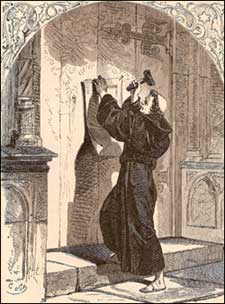
The people of Europe were preparing for All Saints Day… converging on the major cities to attend the churches so they could receive special blessings by looking on the relics, attending Mass, and by doing various kinds of penance. There was a special sale of indulgences which could be purchased excusing the buyer from various kinds of sins. Those superstitions had come to dominate the church.

It greatly troubled a monk in the German university city of Wittenberg. On the eve of all saints day he posted 95 theses for debate on the public bulletin board on the door of the castle church. In those 95 statements he challenged the church to debate its teachings and to question the biblical foundation for some of its beliefs and practices.


It was in 1517, when on October 31st Martin Luther posted his 95 Theses on the door of the Castle Church in Wittenberg. This event marked the beginning of what has come to be known as the Protestant Reformation.

Luther had identified some teachings and practices in the church which had no foundation in the Bible. He wanted those things discussed and academically debated. He wanted the church to submit its beliefs and practices to the authority of Scripture. But his goal was not only academic. He knew that ideas and practices that are not true and right, are serious dangers. They deceive and hurt needy people who are seeking Christ's help and happiness.


“The Ninety-Five Theses” were a call for debate, although a debate never took place. This call did, however, shake the people of Germany. Luther’s challenge went unnoticed for some time by the established Church, but the people did not let it die. Through the providence of God, a call to look to Scripture as the Christians’ sole authority began to ring throughout Germany and other parts of Europe. This movement… was a movement back to the Bible. The motto became Sola Scriptura (Latin for Scripture Alone) and these rebels of God began to spread the Gospel message once again to the world.

With the spread of the Reformation… we see the next great impact of the Gospel in 17th century England. It is here that we begin to see the seed bed of the Baptist movement.
http://www.reformedreader.org/history/pbh.htm


Then, sometime between then and now…

…Multitudes of English Christians were demanding reform in their church. They sensed that the church had become corrupt and selfish, and that it had largely left the simple message of the Bible. Several factors contributed to this clamor for reform: the teachings of such great reformers as Martin Luther in Germany and John Calvin in Geneva; the new translations of the English Bible which allowed the common people once again to read the Word of God; and social and political changes which led people to want more participation in their church.

Several English rulers in the sixteenth century sought to reform the Church of England to some extent. However, none of these reforms went far enough to satisfy those who wanted to return to the simple teachings and practices of the Bible.

One militant group within the Church of England genuinely desired to recover biblical teachings and practices. Deeply influenced by the reforms of John Calvin, they became known as "Puritans," perhaps because they insisted upon more purity of doctrine and practice in the church.

Another group seeking reform was called "Separatists." Most of the Separatists were frustrated Puritans who had given up hope of reforming the church from within. Separatists decided to separate from the Church of England and form their own independent congregations. By 1600, there were already several of these congregations in England, and they mushroomed by 1625.

The Separatists included many groups holding a variety of views. Some of them later helped populate such diverse churches as Quakers, Presbyterians, Congregationalists, and assorted independents and nonconformists. Some of these Separatists, studying the Bible, adopted believer’s baptism and became known as Baptists.

Our best historical evidence says that Baptists came into existence in England in the early seventeenth century. They apparently emerged out of the Puritan-Separatist movement in the Church of England. Some of these earnest people read the Bible in their own language, believed it, and sought to live by it. They formed separate congregations which accepted only believers into their membership, and they baptized converts upon their profession of faith. Their opponents nicknamed them "Baptists," and the name stuck.

Many people assume that Baptists got their name from John the Baptist. This is not the case. Like most religious groups, Baptists were named by their opponents. The name comes from the Baptist practice of immersion.

Perhaps the most startling practice of early English Baptists was their total immersion for baptism after 1640. Crowds would often gather to witness a Baptist immersion service. Some ridiculed… the Baptists as people who "plung’d over head and eares." The nickname "Baptist" was given to describe the people who practiced this strange form of baptism.

The first known reference to these believers in England as "Baptists" was in 1644. They did not like the name and did not use it of themselves until years later. The early Baptists preferred to be called "Brethren" or "Brethren of the Baptized Way." Sometimes they called themselves the "Baptized Churches."
http://www.baptisthistory.org/baptistbeginnings.htm


No definite starting place can be ascribed to the Baptists of the Reformation. For they sprang up in many countries all at once. It is impossible to trace them first of all to any one place, for they appeared in many countries at the same time (J.C. Fusslin, Beitrage zur schweizerischen Reformations geschichte, I. 190; II. 64, 65,265, 328; III. 323. Zurich, 1754).
http://www.reformedreader.org/history/christian/ahob1/ahobc07.htm


The great reformers of Christianity—Martin Luther of Germany and Ulrich Zwingli and John Calvin, both of Switzerland—advocated a drastic return to scriptural authority in the teachings and practice of Christian churches—a significant reform but not a total one.

Some of Zwingli’s students, heartened by his teachings from the Greek New Testament (and not, significantly, from just the passages approved by the Roman church), kept reading and applied biblical precepts to their lives and ministries far beyond the reforms of their teacher. One of these more radical reforms was the practice of believers’ baptism.

Zwingli swerved violently away from the Catholic teaching that baptism has a regenerative effect. Baptism was, to him, merely a sign of joining the Christian society. He equated it with the circumcision of Jewish baby boys and further identified God’s chosen within his Zurich parish with spiritual Israel.

This understanding of baptism was as extra-biblical as the Catholic one, though perhaps not as damaging to the doctrine of salvation. His radical students were pejoratively called “Anabaptists,” or “re-baptizers.” They hated the term because they did not consider any baptism but believers’ baptism valid.

The term did associate them with an earlier heresy though, and cast them into the role of outcasts in the minds of many Germans and Swiss.
http://www.sbtexas.com/default.asp?action=article&aid=2651&issue=3/20/2006


Baptists enjoy the enviable distinction of having excited the hostility and suffered from the oppression of every dominant religious party in England, from the days of Henry the Eighth to the days of the Revolution in 1688.

It is not difficult to understand how this has happened. The Baptists argued that the Church of God should be a community of godly men; that faith is the gift of God, and not to be compelled by force of arms; that only those rites sanctioned or commanded by Christ and His Apostles are binding upon His people; and that the only Lawgiver of the Church is Christ Himself.

Each party had, therefore, its own reason for hating the Baptists; and as each had yet to learn the true nature of religious freedom, each oppressed and persecuted in turn.


The Baptists have suffered, in common with other Christian denominations, at the hands of wicked rulers, and of the Roman hierarchy. They have also suffered by themselves for their peculiar views as Baptists, at the hands of Lutherans, Episcopalians, Presbyterians, and Congregationalists; and for no one thing more than their rejection of infant baptism.

In Germany they were plundered, thrust into dungeons, banished, and numbers of them beheaded or burned alive. Torture was frequently employed to wring from the sufferers the names and abodes of their associates, or to force them to renounce the faith.

In Switzerland, in 1526, it was ordered that if any baptized others, or submitted to baptism (re-baptism, they called it), they should be drowned without mercy. Many Baptist ministers were drowned; and they held their meetings in secret, in the woods, and under cover of the night. Finally, they left the country in large numbers, going to Moravia, where, for a season, they were tolerated; but at length a law was passed expelling them, and they left, some going to Hungary, some to Transylvania, some to Wallachia, and others to Poland.

In the Netherlands, the hand of oppression was heavy on the Baptists. In 1532, three were burned at the Hague. By edicts, published in the following year, all persons were forbidden to harbor Baptist preachers in Holland; and Baptists refusing to recant were to be slain. The torture was constantly resorted to. The victims were stretched on the rack, or thumb-screws were employed, or a similar instrument applied to the ankles. No regard was paid to sex, station, or age. Under Bloody Mary, a good proportion of the martyr blood that flowed was from the veins of Baptists; and many passed to heaven through the fire.

In the early settlements of America, Church and State were united by law, and the Church sustained by taxation and State appropriations in Massachusetts, Connecticut, and Virginia; and persecutions against Dissenters were violent and severe.
http://www.baptistpillar.com/bd0629.htm


With the ("Bloodless" English) Revolution of 1688, and the passing of the Act of Toleration in 1689, the history of the persecution of Baptists, as well as of other Protestant dissenters, ends.
http://www.1911encyclopedia.org/Baptists


Sir Isaac Newton, one of the greatest men who ever lived, declared it was "his conviction that the Baptists were the only Christians who had not symbolized with Rome" (Whiston, Memoirs of, written by himself, 201).
http://www.reformedreader.org/history/christian/ahob1/ahobc07.htm


From Wikipedia:


Baptist churches do not have a central governing authority, resulting in the wide range of beliefs from one Baptist church to another. Baptist distinctives are beliefs that are common among Baptist churches, some of which are also shared with many other post-reformational denominations. Some historically significant Baptist doctrinal documents include the 1689 London Baptist Confession of Faith (Also in Tagalog-Boms), the 1833 New Hampshire Baptist Confession of Faith, and the Southern Baptist Convention's Baptist Faith and Message, which are often used as the "official" doctrinal statements of individual local Baptist churches or the starting point for an official statement.”

See also: List of Baptist Confessions or Doctrinal Statements

The following acrostic backronym, (or ‘backrostic’) spelling of BAPTIST, is used by some Baptist churches as a summary of Baptists' distinguishing beliefs:

“B” for Biblical authority. Baptists emphasize authority of the Scriptures, or sola scriptura, and therefore believe that the Bible is the only authoritative source of God's truth. This view contrasts with the role of Apostolic tradition in the Roman Catholic Church and personal revelation in charismatic circles. Any view that cannot be tied to scriptural exposition is generally considered to be based on human traditions rather than God's leading, and though they may be accurate, such views are never to be elevated to or above the authority of Scripture. Each person is responsible before God for his or her own understanding of the Bible and is encouraged to work out their own salvation.

“A” for Autonomy of the local church. Congregationalist church governance gives autonomy to individual local churches in areas of policy, polity and doctrine. Baptist churches are not under the direct administrative control of any other body, such as a national council, or a leader such as a bishop or pope. Administration, leadership and doctrine are usually decided democratically by the lay members of each individual church, which accounts for the variation of beliefs from one Baptist church to another.

“P” is for Priesthood of all believers The doctrine of "priesthood of all believers" states that every Christian has direct access to God and the truths found in the Bible, without the help of an aristocracy or hierarchy of priests. This doctrine is based on the passage found in 1 Peter 2:9 and was popularized by Martin Luther during the Protestant Reformation and John Wycliff's Lollards before Luther. Baptists are encouraged to discuss scriptural and other issues with their minister and other Christians when appropriate. Ultimately the individual Christian is responsible for understanding the Bible and its application to the individual. The Baptist position of the priesthood of all believers is one column that upholds their belief in religious liberty.

“T” is for Two ordinances (baptism and the Lord's Supper) Generally, most Baptist churches recognize only two sacraments or ordinances that are to be performed on a regular basis by churches: baptism and communion. Some Primitive Baptists and Free Will Baptists also practice foot washing as a third ordinance.

“I” is for Individual soul liberty. The basic concept of individual soul liberty is that, in matters of religion, each person has the liberty to choose what his/her conscience or soul dictates is right, and is responsible to no one but God for the decision that is made. A person may then choose to be a Baptist, a member of another Christian denomination, an adherent to another world religion, or to choose no religious belief system, and neither the church, nor the government, nor family or friends may either make the decision or compel the person to choose otherwise.

“S” is for Separation of Church and State. Baptists who were imprisoned or died for their beliefs have played an important role in the historical struggle for freedom of religion and separation of church and state in England, the United States, and other countries. In 1612 John Smyth wrote, "the magistrate is not by virtue of his office to meddle with religion, or matters of conscience". That same year, Thomas Helwys wrote that the King of England could "command what of man he will, and we are to obey it," but, concerning the church, "with this Kingdom, our lord the King hath nothing to do." In 1614, Leonard Busher wrote what is believed to be the earliest Baptist treatise dealing exclusively with the subject of religious liberty. Baptists were influential in the formation of the first civil government based on the separation of church and state in what is now Rhode Island. Anabaptists and Quakers also share a strong history in the development of separation of church and state.

The original objection was opposition of the monarchy or government setting religious agenda for churches or a "National Church" and did not imply a retreat by Christians from the political realm or involvement in the political process.

“T” is for Two offices of the church (pastor and deacon). Generally Baptists only recognize two Scriptural offices, those of pastor-teacher and deacon. The office of elder, common in some evangelical churches, is usually considered by Baptists to be the same as that of pastor, and not a separate office; however, some churches, especially those in other countries such as Australia, acknowledge the position of elder, and others even dispose of the position of deacon altogether. The office of overseer or bishop is always considered to be the same as that of pastor or presbyter.

Baptists today are the second fastest growing Christian denomination in the world after the Pentecostals; largely due to the growth in Asia, Africa, Latin America and Eastern Europe in the last century.


So, back to today…

May we thank our Lord Jesus Christ, the Sovereign ruler over all eternity… past, present and future… for bringing us from where we’ve been… nurturing us where we are… and sending us where He wills. May we thank Him for the rich heritage of our church’s past, and for the ever more exceeding riches that He has prepared for His church’s eternal future: No eye has seen, no ear has heard, no mind has conceived what God has prepared for those who love Him, and We love because He first loved us.

May Heaven help us if we value the denomination of our money, more than we value the denomination of our churches.

May we thank Him for His Word and His Holy Spirit who opens our hearts and our minds to The Way, The Truth, The Life.

We thank Him for our blessed times at church and for the feeding and fellowship that we enjoy at our Bible study groups.


And then back to last Friday…

Last Friday night, Elder Robert V. led the Blacktown Care Group through Romans 16, wrapping up our 8-9 month study on the Book of Romans. We all pretty much agreed that we should all go back through it again some day, in even finer detail.

We’d like to encourage everyone to discover and keep rediscovering the gloriously humbling "righteousness from God," that Paul wrote about in this most remarkable letter.

Please click on the link below to enjoy the Summary/Highlights of our study. God bless!

http://blacktowncaregroup.blogspot.com/2006/09/summary-of-our-studies-on-romans.html


"Hey, My Brains!" (And A Few Other Stuff...)


"The man who never reads will never be read; he who never quotes will never be quoted. He who will not use the thoughts of other men's brains, proves that he has no brains of his own."
--Charles Spurgeon


Happy the man who sees a God employed in all the good and ill that chequers life. --WILLIAM COWPER

We turn to God when our foundations are shaking, only to learn that it is God who is shaking them. --CHARLES WEST

A firm faith in the universal providence of God is the solution of all earthly problems. It is almost equally true that a clear and full apprehension of the universal providence of God is the solution of most theological problems. --B. B. WARFIELD, God's Providence Over All

I have no hope at all but in thy great mercy. Grant what thou commandest and command what thou wilt. --AUGUSTINE

God promises to deliver us from the penalty of sin (justification), the power of sin (sanctification) and the presence of sin (glorification). --DAVE BROWN

Grace substitutes a full, childlike, and delighted acceptance of our Need, a joy in total dependence. We become like Jolly Beggars. --C.S LEWIS

The greatest judgment which God Himself can, in this present life, inflict upon a man is, to leave him in the hand of his own boasted free-will. --AUGUSTUS TOPLADY

I do not believe we can preach the gospel... unless we preach the sovereignty of God in His dispensation of grace; nor unless we exalt the electing, unchangeable, eternal, immutable, conquering love of Jehovah; nor do I think we can preach the gospel unless we base it upon the special and particular redemption of His elect and chosen people which Christ wrought through the Cross; nor can I comprehend a gospel which lets saints fall away after they are called. --CHARLES SPURGEON

Jesus Christ is the center of everything, and the object of everything, and he that does not know Him knows nothing of nature and nothing of himself. --BLAISE PASCAL

There is not an inch of any sphere of life over which Jesus Christ does not say, "Mine." --ABRAHAM KUYPER

The essence of idolatry is the entertainment of thoughts about God that are not worthy of Him. --A. W. TOZER

So many Christians interpret Christ's words to witness rather than to be a witness. And they see it as an activity instead of what it really is; the state of our being--what you do emerges from who you are. --CHUCK COLSON

We pursue God because, and only because, He has first put an urge within us that spurs us to the pursuit. --A.W. TOZER

Just as the sinner's despair of any hope from himself is the first prerequisite of a sound conversion, so the loss of all confidence in himself is the first essential in the believer's growth in grace. --ARTHUR W. PINK

Preaching "duty," is preaching the Law; preaching the free grace of God, and salvation by Christ, is preaching the Gospel; to say otherwise, is to turn the Gospel into Law and to blend and confound both together. --JOHN GILL

Whoever marries the spirit of this age will find himself a widower in the next. --WILLIAM RALPH INGE

Everyone may be entitled to his own opinion but everyone is not entitled to his own truth. Truth is but one. --DOUG GROOTHIUS

I've learned to hold everything loosely because it hurts when God pries my fingers from it. --CORRIE TEN BOOM

The great paradox of faith is that we find our perfect freedom only when become slaves--slaves to God... In the ancient world, slaves judged their self-worth in relation to the importance of their masters. The greater the social status of a master, the greater the esteem of the slave. Christians are slaves of the greatest and kindest Master of all... --ALISTER McGRATH

An ineffably holy God, who has the utmost abhorrence of all sin, was never invented by any of Adam's fallen descendants. --A. W. PINK

We may think God wants actions of a certain kind, but God wants people of a certain kind. --C. S. LEWIS, Mere Christianity

The world invents its own good works and persuades itself that they are good. But Paul declares that good and right according to the world are to be judged by the commandments of God. --JOHN CALVIN

Sheep and swine can both end up in the mire. Yet the essential difference in their two natures is quiet visible from the reaction each has to its fallen condition. While sheep do stray and stumble into the mire, they quickly loathe the situation and struggle to get free. They may be dirty, but they desire to be clean. They may be stuck, but they bleat for their shepherd to come and save them out of the muck. But swine, in keeping with their nature, wallow in the muck, content to stay there all day. --JOHN ENSOR

It ain't those parts of the Bible that I can't understand that bothers me, its the parts I do understand. --MARK TWAIN


"Christ is either Lord of all, or He is not Lord at all."
--J. Hudson Taylor


Quotes mostly taken from:

http://www.geocities.com/Athens/Forum/3505/WebPageQuotes.html


Saturday, September 30, 2006

If God was sovereign, why do anything? Wrong question.


Many Christians seem to be quite uncomfortable emphasizing and focusing too much on God’s Sovereignty. This may be because they are concerned that people will use this as an excuse to say, “If God is Sovereign (and is totally in control and is working all things according to the purpose of His will) anyway, then why should we do anything? Why don’t we just all sit back and enjoy the show?”

Yet instead of seizing the occasion to expose the foolishness of such a question, we often end up even validating it by saying, "Well yes, God is Sovereign but Man is STILL Responsible." As if God is some Supreme Commander alright, but without His loyal troops playing their part in making the mission a success, well um, then the Great Commander won't be too terribly happy and the troops will miss out and have to settle for second best, or something... All as if the final decision to just sit back and enjoy the show, is truly up to mortals like us to make!

If we're missing out on anything, I think we're missing out on a wonderful opportunity to further herald our Father's majesty, power and providence--working even in us.

By skirting the issue, we allow others to continue with a very unsound view of God and a very pathetic opinion of His dominion over ALL things—including His active dominion over us, and His personal involvement with every single one of His beloved children. Such slanted views of God do not glorify our LORD.

God doesn’t just cause or initiate things and then leave it to us to determine whether we’ll participate in them or not. His Sovereignty is no sovereignty at all, if it is in any way shape or form, waiting for man’s willingness, decision or initiative to participate in His plan or not.

Am I suggesting that Man is no longer RESPONSIBLE? No: Man is STILL Responsible. 

He is still responsible to be holy and blameless before God, even if all our righteousness are like filthy rags to the LORD. Man is RESPONSIBLE for failing every single one of his God-given responsibilities--there is no excuse!

Man MUST do his part. It is essential. It is commanded. It is Biblical. And this is all the more reason why we should all celebrate the fact that:

It is GOD who works in US to both WILL and DO of HIS Good Pleasure.
 (Philippians 2:13)

What can be more inspiring, more encouraging, more exciting and more motivating to a true child of God than that?

God’s Sovereignty means that it is GOD who is initiating AND working out ALL things for the purpose of HIS will—down to the smallest and minutest of details—even to the number of our hairs. Each strand serves our Heavenly Father’s purpose.

Man’s goings are of the LORD, how can a man then understand his own way?

Sometimes we suggest that God waits for man to play his part before God will play His. Perhaps this is when we need to remember that it is we who have been commanded to wait on the LORD, not the other way around.

Championing human initiative and man’s ability to "make the right choices for God" is what brought us The Tower of Babel, the wild child Ishmael, Jacob stealing the birthright that was promised to him anyway, Moses the murderer, King Saul’s downfall, Simon Peter's foray into ear surgery and a host of other embarrassing fiascos—all recorded for posterity in God’s eternal Word.

Yet in all of these, God was and is still in full control—giving us valuable lessons about our inability, our fragility, our limitations and our utter need to be totally dependent on Him alone always. The Glory is all HIS.

God's Sovereignty means that it is HE who is the Master and LORD, ever faithfully transforming His children—shaping us, dragging us, lifting us, moving us from predestination, through election, through regeneration, through justification, through sanctification, from glory to glory with Christ, throughout all eternity.

There are no gaps or blind spots with God nor in His plan. God does not say, “Doh!”

If a person is not being actively used of God, then the onus is not on that person to be of use to God. No, the onus is on that person to be afraid—very, very afraid. For this is no small matter. If God is not actively working in a person, then there may be eternal implications for that person, that are too horrible to imagine. It doesn’t matter how long that person has been attending church, for it does not depend on man’s desire or effort, but on God’s mercy. And for us to suggest otherwise might be tantamount to offering that person a false hope, the cruelest of all hoaxes.

We are saved by GOD’s Grace Alone, through Faith Alone, in CHRIST Alone, as declared in Scripture Alone: All for the Glory of GOD Alone.

God does not save anyone merely to give them a choice whether they want to participate in God’s plan or not. No, God saves us because He is already actively involving us in His plan: For we are God’s workmanship, created in Christ Jesus to do good works, which God prepared in advance for us to do--even before the foundation of the world.

(And if any of us should end up in hell, then it is still for the glory of God who reminds us of what we truly deserve!)

God’s Sovereignty means that it is He who makes a people that is not His people, to be His people—and He will be their God. Just as sure as when God said, "Let there be light" and there was light, we can be sure of this!

God's word is true. It will accomplish that which He purposed and will succeed in all for which He sent it. 

God’s Sovereignty means that it is He who is the one removing our stony hearts and putting into us, hearts of flesh. It is He who is putting His Spirit in us, so that we can walk in His statutes and execute His judgments—not by our own choosing or His mere enabling, but by His actively carrying this out in us. Our God is not one who simply calls us to do something, then waits for us to decide to do it or not--otherwise we shall all be doomed! Praise God that He who is calling is also the one who causing everything to work out according to His will.

Like it or not, God’s Sovereignty means that poor old Moses went to Pharaoh, even if not once did Moses say to God, “Yes, sir.” 

In short, Moses went to Pharoah even if there is absolutely no indication in the Bible that Moses was himself willing to go. If it were up to Moses' choice, he would rather that God left him alone! 

And yet Moses led the Israelites for forty years, even as he complained to God, “Why have you brought this trouble on your servant? What have I done to displease you, that you put the burden of all these people on me?... I cannot carry all these people by myself; the burden is too heavy for me. If this is how you are going to treat me, put me to death right now...”

God's Sovereignty prevailed regardless.

God’s Sovereignty means that little Gideon was told: “You have too many men…If I say this one shall go with you, he shall go; but if I say this one shall not go with you, he shall not go.” If the choice was up to Gideon, he would have preferred that God assigned the mission to someone else, right from the very beginning!

God’s Sovereignty means that Jeremiah still heralded God’s Truths, even as he lamented, “O Lord, you have deceived me, and I was deceived; you overpowered me and prevailed. I am ridiculed all day long; everyone mocks me.” God’s Sovereignty means that Jeremiah still proclaimed the Word of God, even as Jeremiah chose and determined not to “mention Him or speak anymore of His name…”

God’s Sovereignty means that Jonah went to Nineveh, even when he preferred instead to die. If the whole matter were up to Jonah, he would have chosen to send all of Nineveh straight to hell. (So much for all of that "People-don't-care-how-much-you-know-until-they-know-how-much-you-care" drivel.)

God’s Sovereignty means that Simon Peter became a fisher of men, even after telling Jesus to, “Go away from me, Lord; I am a sinful man!” Peter's choice was to send God away!

God’s Sovereignty means that Saul of Tarsus who chose to persecute of the flock, became Paul—a bondservant of Christ, Apostle to the Gentiles.

God’s Sovereignty means that the Spirit Himself intercedes for us with groans that human words cannot express. God’s Sovereignty means that at His appointed time, “You will be given what to say, for it will not be you speaking, but the Spirit of your Father speaking through you.”

God’s Sovereignty means that true Christians CANNOT be fatalists. For the fatalist declares Fate to be in full control through chance; whereas those in the Faith proclaim God is in full control through Jesus!

The fatalists’ only hope is chance. Our very hope is Jesus—therefore there is no chance for chance.

God’s Sovereignty means that He has made sinners into Saints, worshipping an intensely active and deeply personal God, who is involved in everything that we are, were and will be—having sent us from where we’ve been, keeping us where we are and sending us to where He wills. No chance for chance.

God’s Sovereignty means that the decision to do anything or nothing, mercifully does not lie with vain capricious men. The decision belongs to the Sovereign God and Master, The King of Kings and LORD of Lords: The Shepherd, not the sheep. The Potter, not the clay. And so there is no chance for chance.

And who are we to protest? Do we feel slighted by being referred to as clay?

Then may God be gracious to us and cause us instead to cry out, “LORD Almighty, The Holy Righteous and Everlasting God: because it is You who is the Potter—because it is YOU who is The Potter—then what higher honor, what greater glory and what grander ambition can anyone have than to be YOUR Clay!”

Oh, how the planets and stars in the galaxies must groan in envy, because it is WE whom the Sovereign LORD has chosen to be His clay.

Yet over and above this, by His Sovereign Grace, He justifies the ungodly, having mercy on whom He will have mercy and adopts them to be His very own children: co-heirs with CHRIST!

So are we still to ask, “If God is Sovereign, then why do anything?”

Perhaps what we should be asking instead is, “If God is NOT Sovereign, then WHY do anything?

If God is NOT Sovereign, then why come to church? Why read the Bible? Why proclaim the Gospel? Why praise His name? If God is NOT Sovereign, then I can do whatever my sinful heart desires.

Yet it is because GOD IS SOVEREIGN, that the former objects of His wrath now have peace with Him who proclaimed: "I lay down my life—only to take it up again. No one takes it from me, but I lay it down of my own accord. I have authority to lay it down and authority to take it up again."

It is because GOD IS SOVEREIGN, that is why mortal sinners who do not understand and do not seek after God, end up worshipping Him forever!

It is because GOD IS SOVEREIGN, that is why those who used to live for themselves no longer live—but it is Christ who lives in them. The dead have no say over the One who is living. This is not an appeal for the dead to surrender their will to Christ—no, it is a declaration that Christ has taken over. The redemption has begun—Mission: Unstoppable. No chance for chance!

Through every painful struggle and correction and heartache and frustration and disappointment that He has ordained to take us through: in all this, we are more than conquerors through Christ who loves us. He is our chief and highest motive and there can be no greater exhortation to a true Christian than Christ Himself.

It is because GOD IS SOVEREIGN, that in Him we LIVE and MOVE and have our being.

GOD IS SOVEREIGN and that is why everything—EVERYTHING is going exactly according to His plan. Yes, people break His commandments all the time, and this breaks our hearts! But do not be deceived. God is not mocked. Whatsoever a man sows, so shall he reap. It’s all going according to God’s plan and nothing—absolutely not a single solitary thing is exempt.

Not even Satan, our enemy, our accuser and our tormentor—to whom we should not give a foothold—the ruler of the kingdom of the air, the spirit who is now at work in those who are disobedient, not even he is exempt. Satan could not sift Peter as wheat without Christ’s permission. Satan himself could not touch Job without God’s consent. So let us not be surprised if Satan himself cannot even scratch his own nose, if it is not according to God’s plan!

Jesus Christ is LORD. That means Jesus Christ REIGNS. That means Jesus Christ is SOVEREIGN.

Christ's LORDship, His Reign, His Sovereignty are not subject to the choices of man. It is not up to man to decide whether Jesus is Lord or not; whether man accepts it or not, Jesus reigns over all. Christ is not LORD only where we allow Him or choose Him to be REIGN; that's not Sovereignty, that's lip service!

"Listen to me, O house of Jacob, all you who remain in the house of Israel, you whom I have upheld since you were conceived, and have carried since your birth. Even to your old age and gray hairs I am He, I am HE who will sustain you. I have made you and I will carry you: I will sustain you and I will rescue you. To whom will you compare me or count me equal? To whom will you liken me that we may be compared?"

All glory, honor and power are His, to the praise of His Mighty Name: JESUS CHRIST our LORD—the Alpha, the Omega; the Beginning and the End, the Ruler of all things in between.


Ignacio Lacsina jnr.